
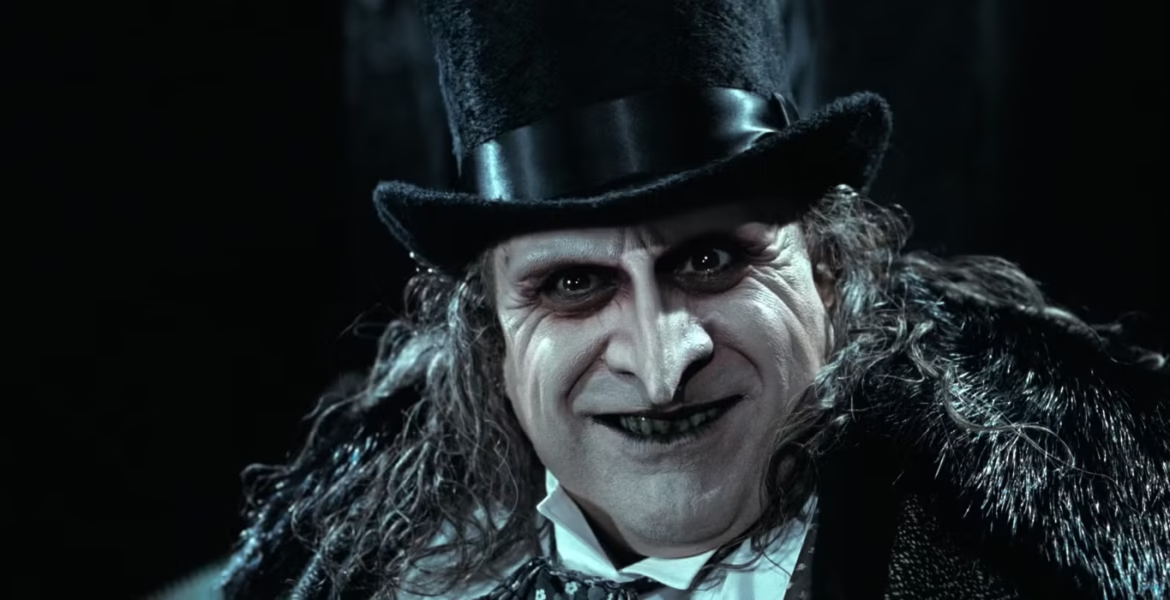
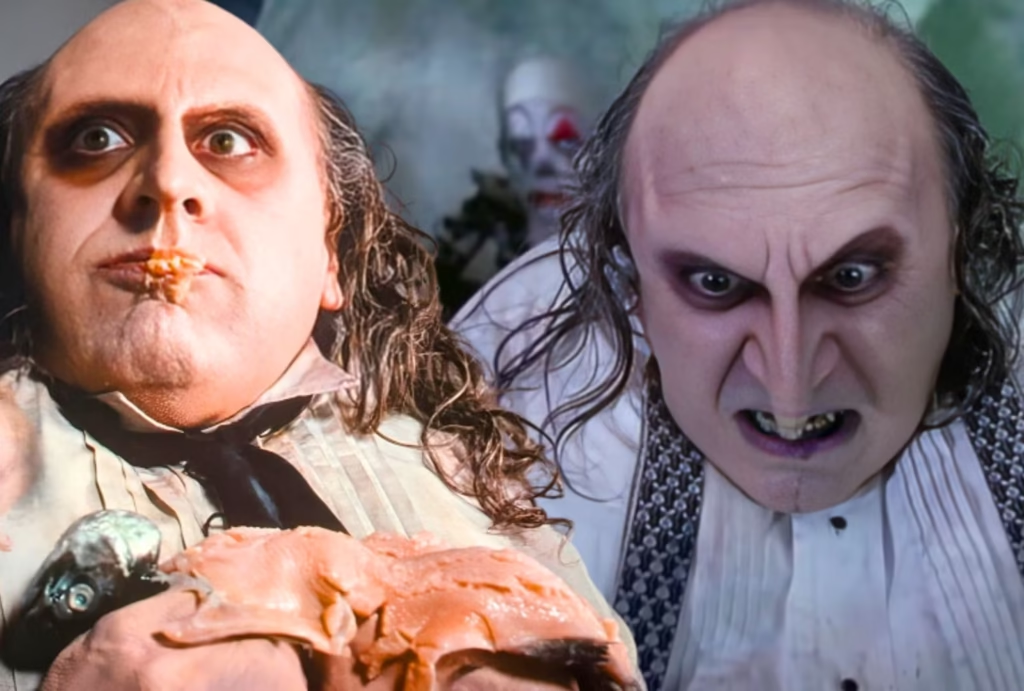
Danny DeVito Penguin remains one of the most unforgettable comic-book movie villains ever brought to the screen. In Tim Burton’s Batman Returns, DeVito transformed Oswald Cobblepot into a grotesque, theatrical, tragic, and strangely sympathetic figure. The performance was far more than an actor wearing a costume: extensive prosthetic makeup, physical acting, costume design, and DeVito’s distinctive interpretation worked together to create a villain unlike most versions of the character. More than three decades later, the role still attracts attention from Batman fans and film audiences. From the character’s disturbing origin to the painstaking makeup process and DeVito’s later thoughts about returning, the story behind the Danny DeVito Penguin is remarkably detailed.
Who Did Danny DeVito Play in Batman Returns?
Danny DeVito played Oswald Cobblepot, better known as the Penguin, in Batman Returns, Tim Burton’s 1992 follow-up to the original 1989 Batman. The film also starred Michael Keaton as Batman, Michelle Pfeiffer as Catwoman, and Christopher Walken as businessman Max Shreck. DC describes the movie as a story in which Gotham faces the bizarre threat of the Penguin alongside Catwoman.
DeVito’s version was intentionally much darker and stranger than earlier screen interpretations. Instead of presenting the Penguin simply as a polished criminal with an umbrella collection, the movie gave him a disturbing physical appearance, an unusual speaking style, and a tragic history. That approach matched Burton’s gothic vision and helped make the character one of the film’s defining elements.
| Detail | Information |
|---|---|
| Actor | Danny DeVito |
| Character | Oswald Cobblepot |
| Supervillain Name | The Penguin |
| Film | Batman Returns |
| Release Year | 1992 |
| Director | Tim Burton |
| Batman Actor | Michael Keaton |
| Catwoman Actor | Michelle Pfeiffer |
| Character Type | Gothic comic-book villain |
| Character Background | An abandoned child who grows up in Gotham’s sewers |
| Main Motivation | Seeking recognition, power, and revenge |
| Distinctive Features | Pale makeup, crooked teeth, black saliva, prosthetic hands, and a rounded costume |
| Performance Style | Dark, theatrical, grotesque, and tragic |
| Comic-Book Connection | Based on the DC Comics character Penguin |
How Danny DeVito Became the Penguin
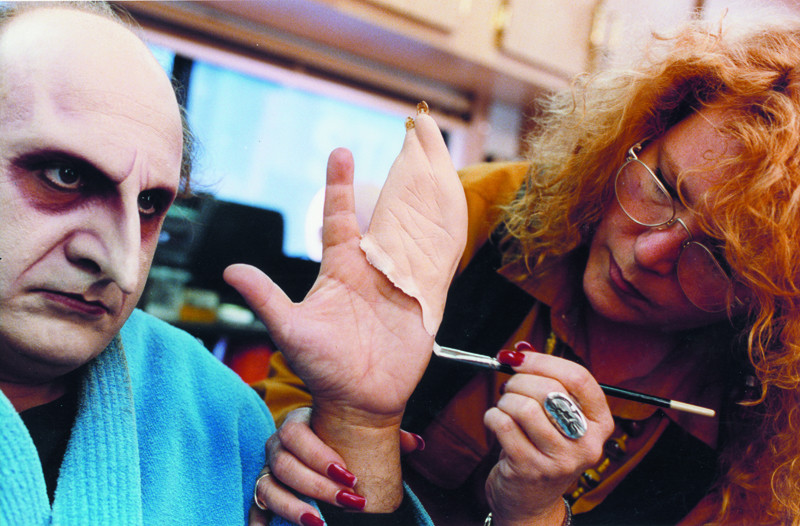
The transformation required far more than ordinary movie makeup. Stan Winston Studio worked extensively on the Penguin’s appearance, using lifecasts of DeVito and developing different prosthetic pieces before settling on the final design. The artists wanted the character to look exaggerated and grotesque while still allowing audiences to recognize DeVito underneath the makeup.
The design emphasized features associated with the Penguin, including exaggerated facial proportions, a beak-like nose, heavy jowls, pale skin, and dark areas around the eyes. The final makeup included a large facial appliance, crooked teeth, prosthetic hands, and body padding. The result made DeVito look almost like a distorted human version of the comic-book villain.
How Long Did DeVito’s Penguin Makeup Take?
The makeup process reportedly took around four and a half hours when production began, although the team eventually reduced the application time to roughly three hours. The transformation involved several pounds of facial prosthetics, body padding, and other practical effects.
That preparation was important to DeVito’s performance. The actor became so connected with the physical appearance of the Penguin that the makeup helped him return to the character mentally. Even when some dialogue had to be re-recorded, the production used the makeup to help DeVito get back into his Penguin performance.
Why the Penguin Looked So Different
One of the biggest strengths of the Danny DeVito Penguin was its commitment to practical effects. Rather than relying primarily on digital technology, the filmmakers created a physical character that audiences could see interacting with the environment and other performers. This gave the Penguin a tactile, unsettling quality that remains striking today.
Stan Winston Studio experimented with different nose shapes and facial designs before reaching the final appearance. Early concepts were considered too pointed and distracting, so the design was refined to create something more grotesque without completely hiding DeVito’s identity. The result was deliberately theatrical but still grounded enough for the actor’s expressions to remain visible.
Danny DeVito’s Performance Made the Penguin Memorable
The makeup created the foundation, but DeVito supplied the personality. His Penguin is theatrical, unpredictable, angry, wounded, and frequently disturbing. He moves differently from an ordinary person and uses exaggerated gestures to make even simple moments feel unusual.
That physical performance helped separate DeVito’s Penguin from the versions that came before and after him. His interpretation feels almost like a live-action gothic comic-book character. At the same time, the story gives Oswald emotional vulnerability, allowing viewers to understand that his cruelty is connected to rejection and resentment.
The Tragic Origin of Oswald Cobblepot
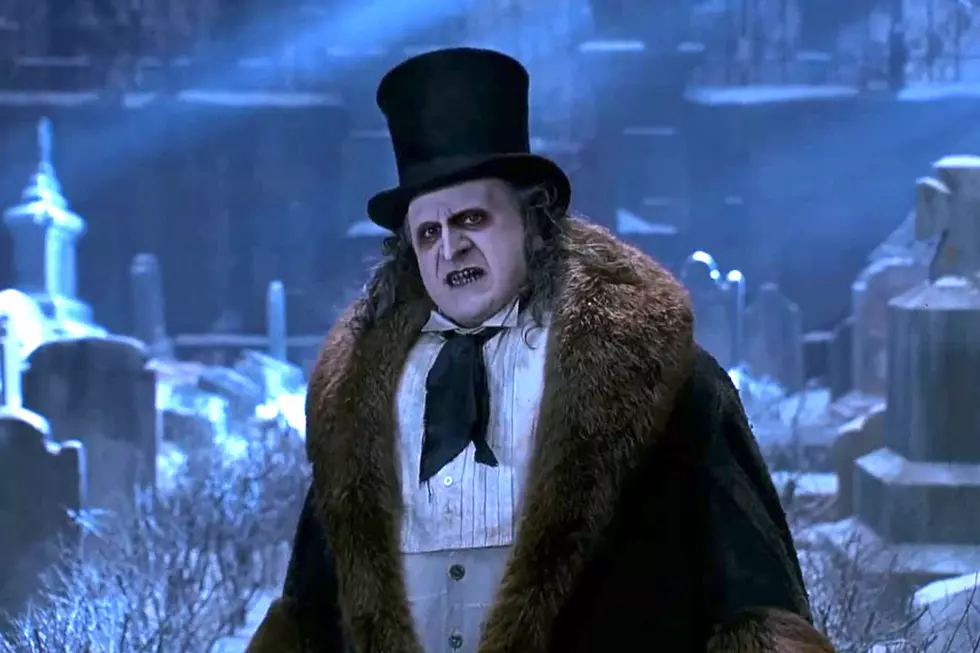
Batman Returns gives the Penguin a particularly unusual origin story. As a baby, Oswald is abandoned by his wealthy parents and eventually grows up in Gotham’s sewers among penguins. His physical differences and isolation become central parts of his identity.
This background makes the character more complicated than a straightforward supervillain. He wants acceptance and recognition, but his desire for revenge pushes him toward increasingly violent and manipulative behavior. DeVito plays both sides of that personality, which helps explain why audiences can find the character horrifying and strangely sympathetic at the same time.
The Penguin and Catwoman
The Penguin’s relationship with Catwoman is another major part of Batman Returns. Michelle Pfeiffer’s Selina Kyle is herself undergoing a dramatic transformation, moving from a timid assistant into one of Gotham’s most dangerous figures.
The two characters share an outsider quality, but their personalities are very different. The Penguin tries to manipulate people and gain political power, while Catwoman struggles with identity, independence, and revenge. Their interactions create some of the movie’s strangest and most memorable scenes.
Danny DeVito and Michelle Pfeiffer’s On-Screen Chemistry
Although the Penguin and Catwoman are not a conventional romantic pairing, their scenes contain an unusual tension. DeVito later spoke humorously about being attracted to Pfeiffer while they were filming and described her affectionately when discussing the experience years afterward.
That behind-the-scenes story adds another interesting layer to their scenes. On screen, the Penguin’s interest in Catwoman is awkward and unsettling, while Pfeiffer’s character remains unpredictable and largely uninterested in his advances.
The Penguin’s Disturbing Black Saliva
One of the strangest details associated with DeVito’s Penguin is the character’s black saliva. It became an important part of the villain’s grotesque visual identity, particularly during moments when his anger or excitement becomes extreme.
The effect was created practically rather than through modern digital effects. DeVito and the effects team used mouthwash and food coloring to produce the appearance. According to production accounts, the substance was prepared so DeVito could use it during scenes without relying on computer-generated imagery.
Penguin’s Costume and Physical Transformation
The Penguin’s costume completed the transformation. DeVito was given padded clothing and other practical elements that changed his silhouette and helped make him appear more like the unusual creature Burton envisioned.
The costume was not designed simply to make DeVito look larger. It contributed to the character’s physical language. The rounded body shape, formal clothing, pale face, and exaggerated features made the Penguin appear simultaneously aristocratic, grotesque, and almost animal-like.
| Penguin Element | Purpose |
|---|---|
| Facial prosthetics | Created the exaggerated Penguin appearance |
| Crooked teeth | Added to the character’s grotesque look |
| Pale skin | Made Oswald appear unnatural and sickly |
| Dark eye makeup | Emphasized his sinister expression |
| Body padding | Changed DeVito’s silhouette |
| Prosthetic hands | Strengthened the creature-like appearance |
| Formal costume | Connected the character to his wealthy origins |
| Black saliva | Added an unsettling practical effect |
How Tim Burton Shaped Danny DeVito Penguin
Tim Burton’s filmmaking style was crucial to the character. Batman Returns is darker, more expressionistic, and more bizarre than many conventional superhero films. Gotham feels like a nightmare version of a major city, and the Penguin fits naturally into that environment.
Burton allowed the character to become almost operatic. The Penguin is not simply a criminal who wants money. He is a damaged outsider seeking power and recognition, and the exaggerated visual design reflects the emotional extremes of his story. DeVito’s performance works because it embraces that heightened style instead of trying to make Oswald feel completely realistic.
Danny DeVito Penguin Compared With Other Versions
The Penguin has been portrayed by several actors across television, film, animation, and other media. Burgess Meredith played the character in the 1960s Batman television series, while Colin Farrell later offered a very different interpretation in Matt Reeves’ The Batman and HBO’s The Penguin.
DeVito’s version occupies a unique position between these portrayals. Meredith leaned into the character’s comic-book humor, while Farrell created a more grounded crime-world interpretation. DeVito, meanwhile, combined grotesque horror, dark comedy, theatricality, and tragedy.
| Actor | Major Portrayal | Style |
|---|---|---|
| Burgess Meredith | Batman TV series | Comic and theatrical |
| Danny DeVito | Batman Returns | Gothic, grotesque, tragic |
| Robin Lord Taylor | Gotham | Crime drama and character study |
| Colin Farrell | The Batman / The Penguin | Grounded crime-world interpretation |
Did Danny DeVito Want to Play Penguin Again?
DeVito has repeatedly shown enthusiasm for returning to the Penguin. In interviews, he has said he would consider reprising Oswald Cobblepot, particularly in connection with the wider Batman multiverse. He has also spoken warmly about the original experience and the creative freedom Burton gave him.
His interest is understandable because the role remains one of the most distinctive performances of his career. DeVito has described Batman Returns as an important acting opportunity, and his comments suggest that he still has affection for the character and Burton’s interpretation.
Danny DeVito Penguin Comic Connection
DeVito’s relationship with the Penguin eventually extended beyond acting. He contributed a story to the DC anthology Gotham City Villains Anniversary Giant, giving him another opportunity to explore Oswald Cobblepot from a creative perspective.
This was especially interesting because DeVito was not simply returning as an actor. He was helping write for the character, offering another interpretation of the Penguin’s world. That connection demonstrates how strongly the role became associated with his creative identity.
Why Danny DeVito Penguin Still Matters
More than thirty years after Batman Returns, the Danny DeVito Penguin remains a benchmark for comic-book villain performances. The character succeeded because several elements came together: Burton’s visual direction, Stan Winston Studio’s practical effects, the costume, the gothic production design, and DeVito’s fearless acting.
The performance also illustrates why practical effects can have such a lasting impact. Modern audiences are accustomed to highly digital transformations, but DeVito’s Penguin still feels physical and immediate. The strange face, crooked teeth, body shape, and unsettling details create a character that looks genuinely present rather than digitally manufactured.
Frequently Asked Questions
Who played the Penguin in Batman Returns?
Danny DeVito played Oswald Cobblepot, also known as the Penguin, in Tim Burton’s 1992 film Batman Returns.
How long did Danny DeVito Penguin makeup take?
The makeup initially took about four and a half hours to apply, but the production eventually reduced the process to roughly three hours.
Was Danny DeVito Penguin based on the comics?
Yes. The character was based on DC Comics’ Penguin, but Tim Burton and the makeup team created a much darker and more grotesque cinematic interpretation.
Did Danny DeVito enjoy playing the Penguin?
Yes. DeVito has spoken positively about the role and has expressed interest in returning as Oswald Cobblepot.
Why is Danny DeVito Penguin so famous?
His performance combined practical makeup, physical comedy, horror, tragedy, and theatrical acting, creating one of the most distinctive interpretations of the Batman villain.
Also Read: Nicole Polizzi
You may also like

Leave a Reply