
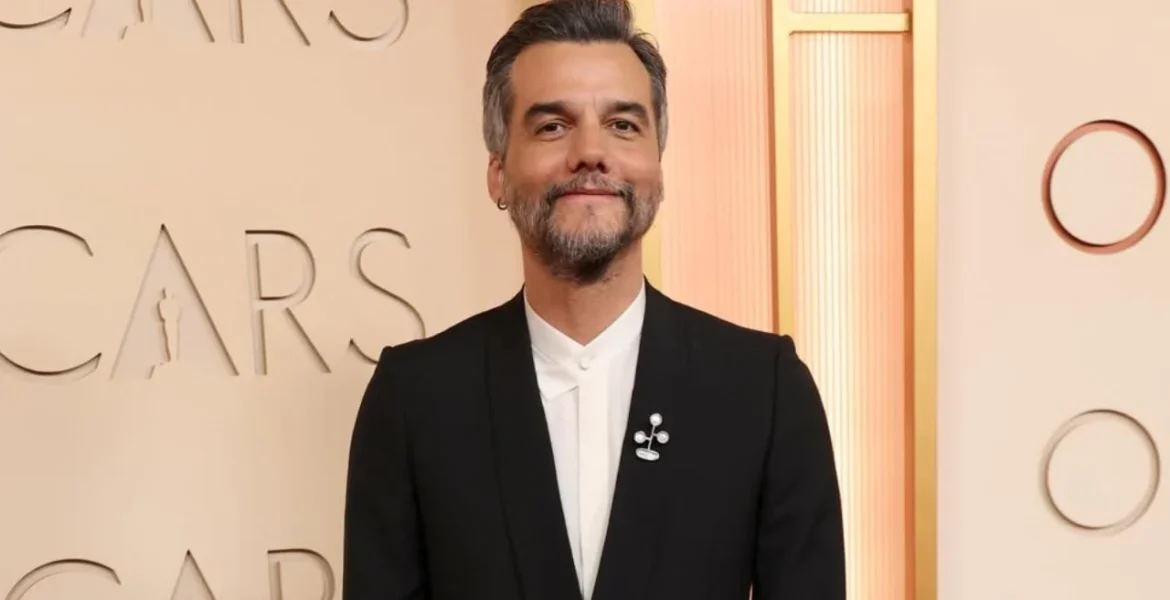
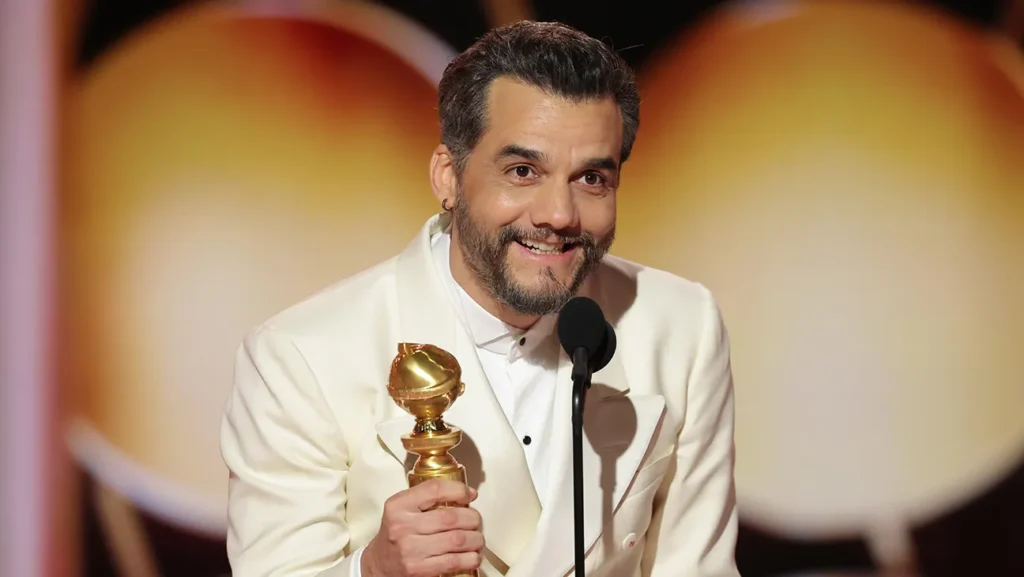
When audiences search for Wagner Moura Civil War, they are usually interested in more than simply knowing that the Brazilian actor appears in the film. Alex Garland’s Civil War gave Moura one of his most prominent English-language movie roles, placing him alongside Kirsten Dunst, Cailee Spaeny, and Stephen McKinley Henderson in a tense story about journalists traveling through a fractured United States.
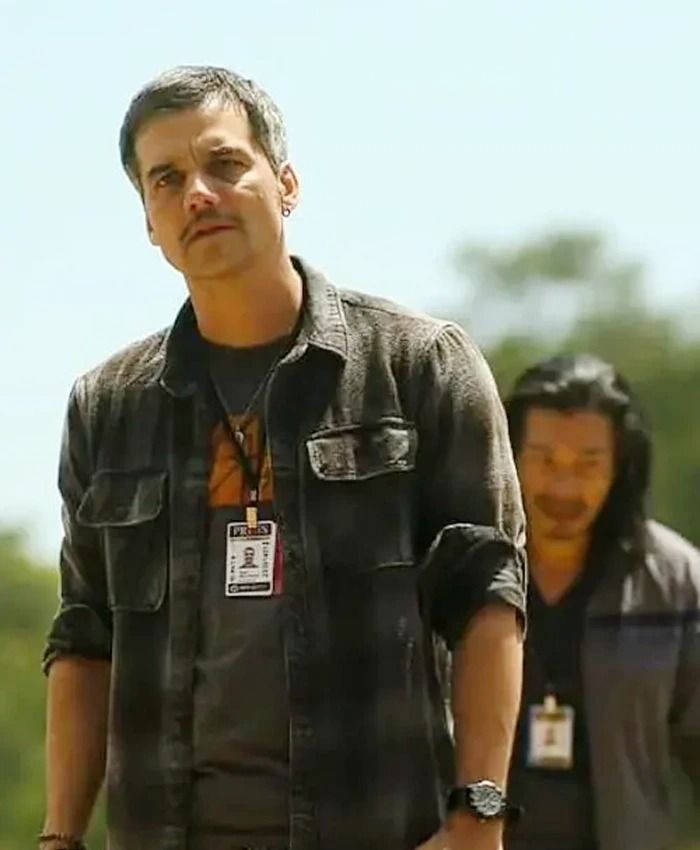
Moura plays Joel, a war photographer whose job is to document violence rather than participate in it. That distinction becomes increasingly important as the journey grows more dangerous. The performance also came after his internationally recognized portrayal of Pablo Escobar in Narcos, making Civil War another significant step in his international career. Here is a closer look at Wagner Moura’s character, preparation, relationships, military scenes, and the film’s lasting impact on his career.
Who Is Wagner Moura in Civil War?
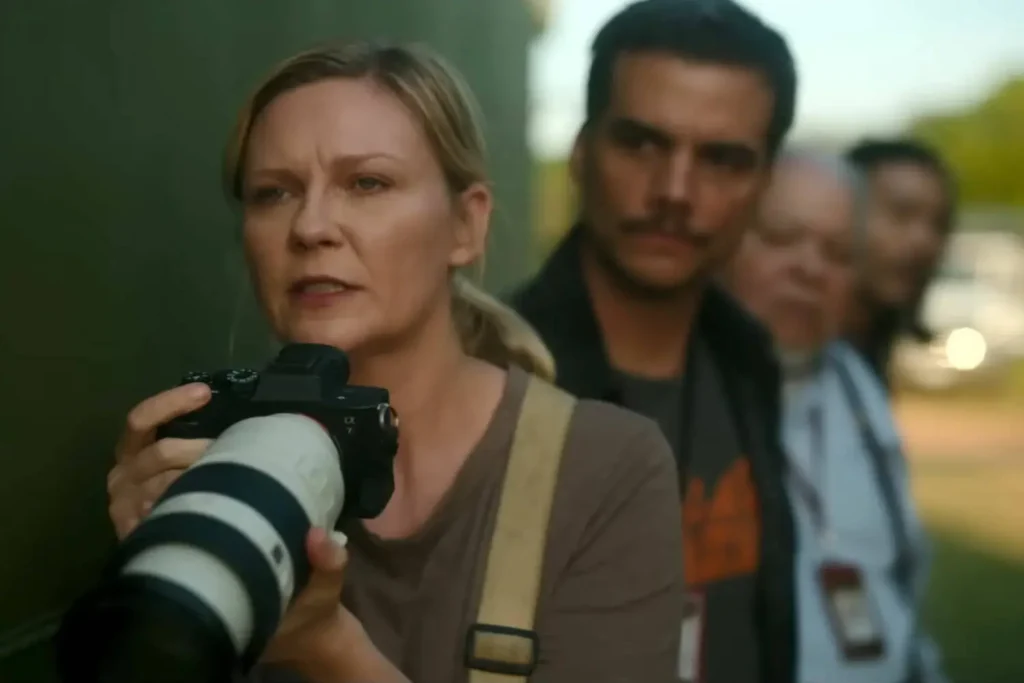
Wagner Moura plays Joel, one of the journalists at the centre of Civil War. He travels across a United States consumed by a fictional conflict, working alongside veteran photojournalist Lee, played by Kirsten Dunst. Their group also includes young photographer Jessie and journalist Sammy.
Joel is not a soldier, politician, or government official. He is a journalist trying to survive while recording what happens around him. That perspective is central to the film because Garland places the audience beside people who observe the violence without necessarily understanding every political force driving it.
The movie deliberately avoids giving viewers a conventional political roadmap. Instead, it presents a fractured America through the eyes of journalists moving from one dangerous situation to another. This makes Joel’s profession especially important: he is constantly positioned between witnessing history and becoming part of it.
Wagner Moura’s Character at a Glance
| Detail | Information |
|---|---|
| Actor | Wagner Moura |
| Character | Joel |
| Profession | War photographer |
| Film | Civil War |
| Director | Alex Garland |
| Studio | A24 |
| Main co-stars | Kirsten Dunst, Cailee Spaeny, Stephen McKinley Henderson |
| Release year | 2024 |
| Genre | Dystopian political thriller |
What Is Civil War About?
Civil War imagines a near-future United States that has collapsed into a violent internal conflict. Rather than explaining every political detail, the film follows a group of journalists as they travel toward Washington, D.C., where they hope to document the final stages of the conflict.
This storytelling choice makes the movie feel different from a traditional war film. Viewers are not given a simple explanation of who is right or wrong. Instead, they experience the conflict through images of destroyed cities, military attacks, frightened civilians, checkpoints, and journalists trying to continue their work.
The decision was important to Garland because the movie is less interested in creating a detailed alternate-history textbook and more interested in exploring what happens when political divisions become so extreme that normal social structures disappear.
For Moura, this environment created an unusual acting challenge. Joel needs to look like someone who has experience around violence without becoming emotionally detached from it. He has seen enough to understand danger, yet he remains capable of reacting to the horrifying situations surrounding him.
Why Did Wagner Moura Take the Role?
Moura had already established himself as a major actor in Brazil before becoming internationally known. His career included Elite Squad, Elite Squad 2, Tropa de Elite, and numerous other Brazilian productions. His performance as Pablo Escobar in Netflix’s Narcos later introduced him to an enormous global audience.
Civil War allowed him to explore a completely different type of character. Escobar was a powerful criminal figure whose decisions affected thousands of people. Joel, by contrast, is an observer. His power comes from his camera, his journalism, and his ability to record what others might never see.
That distinction gives the performance an interesting layer. Joel is surrounded by people carrying weapons, but his primary tool is a camera. He does not control the conflict. He documents it.
The role also connected with Moura’s own background in journalism. Before becoming a full-time actor, he studied journalism at the Federal University of Bahia and had experience working in the field. That personal history gave him an unusual connection to Joel’s profession.
How Did Wagner Moura Prepare for Joel?
Playing a war photographer requires more than learning lines. Joel has to behave like someone accustomed to moving through dangerous environments while paying attention to visual details. His reactions need to feel professional rather than exaggerated, especially when explosions and gunfire are happening around him.
Moura’s understanding of journalism therefore became useful. He could approach Joel as a professional observer rather than simply an action character. That difference helps explain why Joel often seems focused on what is happening in front of his camera even when the surrounding situation is terrifying.
The film’s visual style strengthened this approach. The journalists are frequently shown moving through chaotic environments while trying to capture images. Their work becomes almost inseparable from survival.
For Joel, taking a photograph is not simply an artistic decision. It is part of his profession and identity. That creates an important question throughout the movie: how much danger should a journalist accept in order to record the truth?
Were the Military Scenes Difficult for Wagner Moura?
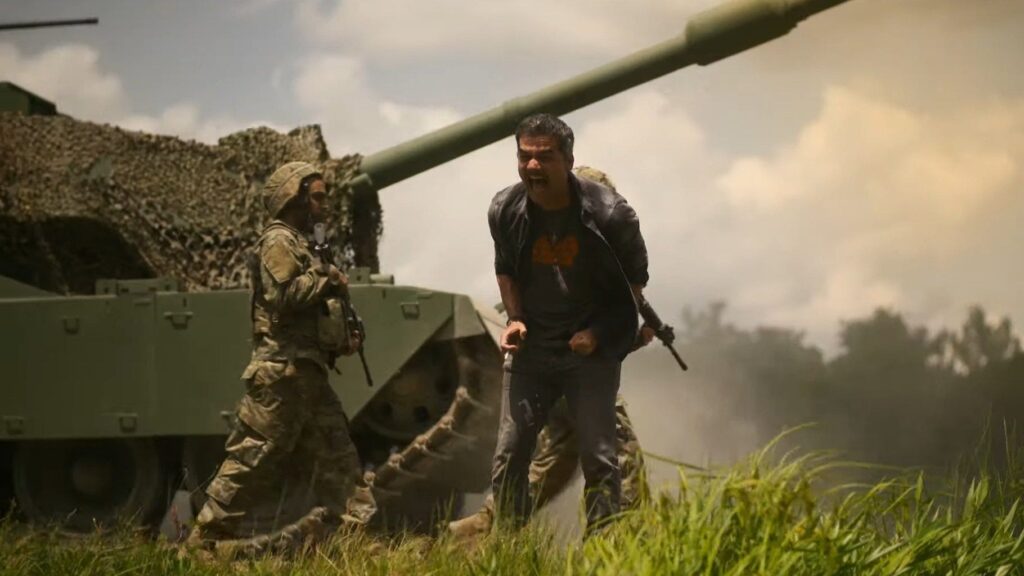
The military sequences were among the most demanding parts of Civil War. The production aimed for an immersive atmosphere, and the cast had to work in environments designed to feel chaotic, loud, and unpredictable.
Moura discussed the intensity of filming war sequences and the way practical elements affected the actors. Instead of treating combat as something happening at a comfortable distance, the production attempted to make the performers feel as though they were actually surrounded by conflict.
That realism matters because Civil War depends heavily on atmosphere. The explosions, gunfire, vehicles, soldiers, and crowds create a world that feels unstable. The actors have to respond to that environment naturally rather than appearing as though they are simply waiting for their next line.
The approach also separates the film from many conventional action movies. The journalists do not move through battles like superheroes. They are vulnerable, frightened, confused, and sometimes forced to make decisions within seconds.
Wagner Moura and the Famous Soldier Scene
One of the most talked-about moments in the movie’s marketing involved Joel and Lee encountering an armed soldier played by Jesse Plemons, who is Kirsten Dunst’s real-life husband. The scene became memorable because of its unsettling interrogation of the characters’ identity.
Joel attempts to establish that he and the others are American, but the soldier responds with a disturbing question about what kind of American they are. The exchange captures one of the movie’s central ideas: when society becomes deeply divided, even shared national identity can become meaningless.
The scene works because it does not rely on a long political speech. Instead, a short interaction creates an atmosphere of uncertainty and fear.
Moura’s performance contributes to that tension. Joel understands that arguing may make the situation worse, yet he also realizes that silence does not guarantee safety.
This sequence also demonstrates Garland’s preference for unsettling ambiguity. The soldier’s ideology is not fully explained. The audience is left to consider what kind of society could produce someone who treats ordinary civilians as potential enemies.
Did Narcos Help Wagner Moura With Civil War?
Wagner Moura’s association with Narcos is unavoidable when discussing his international career. His portrayal of Pablo Escobar became one of the performances that introduced him to mainstream American audiences.
However, Civil War was an opportunity to move away from that identity. Joel could not be more different from Escobar. One is a journalist attempting to document violence; the other was one of the world’s most infamous drug traffickers.
The contrast demonstrates Moura’s range. His career has often involved morally complicated characters, but he has not restricted himself to one type of performance.
| Narcos Experience | How It Helped in Civil War |
|---|---|
| Played Pablo Escobar | Built experience with complex, intense characters |
| Worked with Colombian history | Helped him understand conflict-driven environments |
| Spent time in Medellín | Strengthened his cultural immersion and research skills |
| Learned Spanish for the role | Demonstrated his ability to prepare deeply for demanding roles |
| Experienced emotionally heavy scenes | Helped him handle the intensity of Civil War |
| Worked around violence in Narcos | Made the atmosphere of Civil War more familiar |
| International breakthrough | Increased his confidence and visibility in Hollywood |
| Worked with José Padilha | Strengthened his connection to major international productions |
Interestingly, both roles involve environments shaped by violence. The difference lies in how the characters respond to that violence. Escobar creates and controls it. Joel tries to understand and document it.
That contrast makes Civil War particularly useful when looking at Moura’s development as an international actor. He was no longer simply the star of Narcos. He was becoming a performer capable of moving between major international productions and very different genres.
What Makes Joel Different From Pablo Escobar?
The easiest way to compare the characters is through their relationship with power.
Pablo Escobar possesses enormous power within his world. He commands people, builds an empire, and uses violence to maintain control. Joel, on the other hand, has almost no institutional power. His influence comes from his ability to witness and photograph.
| Character | Wagner Moura Role | Relationship With Violence |
|---|---|---|
| Pablo Escobar | Narcos | Creates and controls violence |
| Joel | Civil War | Documents and survives violence |
| Captain Nascimento | Elite Squad | Enforces authority through violence |
| Other Moura roles | Various | Often morally complex |
This pattern helps explain why Moura is effective in intense stories. He can portray characters who exist inside violent systems without making them feel identical.
Joel’s restraint is particularly important. He is not constantly explaining his emotions. Instead, Moura allows the character’s reactions, body language, and professional instincts to communicate what he is experiencing.
Wagner Moura and Kirsten Dunst’s Relationship in the Film
Joel and Lee have a professional relationship built on shared experience. Both understand the dangers of war journalism, and both have developed ways of coping with situations that would overwhelm less experienced reporters.
Kirsten Dunst’s Lee is arguably the emotional centre of the journalist group. Her experience gives Jessie a model to follow, while Joel provides another perspective on what it means to work inside a war zone.
Their relationship is not presented as a traditional romantic partnership. Instead, the connection comes from professional trust.
They understand that their work can be dangerous, but they also understand why it matters. That shared belief keeps the group moving even when the journey becomes increasingly frightening.
The relationship between Joel and Lee also makes the younger Jessie more important. She is learning from people who have spent years photographing conflict, but the movie gradually asks whether experience actually makes someone emotionally prepared for what they encounter.
Why Is Journalism So Important in Civil War?
Journalism is arguably the film’s most important theme. Garland could have followed soldiers, politicians, or civilians, but he deliberately chose journalists as the primary characters.
That decision allows the audience to experience the conflict through people whose job is to observe. The camera becomes almost as important as a weapon because photographs can preserve evidence of what happened.
The journalists also raise uncomfortable ethical questions. Should they continue taking photographs when people are dying? Should they intervene? Does documenting violence help victims, or can the act of photographing suffering become exploitative?
Joel’s character does not provide simple answers. His actions suggest that he believes documenting history matters, even when the process is frightening.
This idea connects to Moura’s own background in journalism. His understanding of the profession adds credibility to a character who must appear comfortable behind a camera while surrounded by chaos.
How Realistic Are the War Scenes?
The film’s realism comes from several elements working together. Production design creates damaged environments, while practical effects, sound design, costumes, vehicles, and cinematography help establish the feeling of an active conflict zone.
The actors also contribute to that realism. They cannot behave as though the environment is fictional. Their movements and reactions need to respond to what is happening around them.
That is particularly important for Moura because Joel spends much of the film in the middle of dangerous situations. His performance has to communicate awareness without becoming theatrical.
The result is a film that often feels closer to a war-reporting experience than a conventional Hollywood action movie. The journalists are not invincible. Their cameras do not protect them.
Instead, every encounter carries the possibility that something could go badly wrong.
What Did Wagner Moura Think About the Film?
Moura has spoken about the importance of the film’s questions surrounding political division, violence, and journalism. Rather than treating Civil War as a simple prediction about American politics, he has discussed its ability to encourage conversations about polarization and social conflict.
That distinction is important. The film intentionally leaves many political questions unanswered.
The absence of a clear ideological explanation forces viewers to concentrate on consequences rather than causes. Cities are destroyed. Civilians are frightened. Journalists risk their lives. Institutions appear to be collapsing.
Moura’s Joel exists inside that uncertainty. He does not have all the answers, and neither does the audience.
This makes his character particularly effective. Joel is not there to explain the fictional American civil war. He is there to witness it.
How Did Civil War Change Wagner Moura’s Career?
Civil War strengthened Moura’s position as an international actor. His earlier work had already earned respect in Brazil, while Narcos established him as a recognizable face for global audiences.
Working with Alex Garland and an ensemble featuring Kirsten Dunst and Cailee Spaeny further expanded that profile.
The film also demonstrated that Moura could fit naturally into an English-language ensemble without losing the qualities that made him compelling in Brazilian cinema.
His career after Civil War continued to develop internationally. More recent work has reinforced his reputation as an actor willing to take politically and emotionally complex material rather than simply repeating the type of character that first made him famous.
In that sense, Joel represents an important career transition.
Wagner Moura’s Career Before Civil War
Moura’s international success did not happen overnight. He had already built a substantial career in Brazilian film and television.
His performance as Captain Nascimento in Elite Squad became particularly influential. The character placed him inside another story about violence, policing, corruption, and moral uncertainty.
He later portrayed Pablo Escobar in Narcos, requiring a dramatic physical transformation and an extended commitment to the character.
Other projects included Wasp Network, The Gray Man, and Puss in Boots: The Last Wish, showing his increasing presence in international productions.
By the time Civil War arrived, Moura was therefore not a newcomer trying to establish himself. He was an established Brazilian performer entering another major stage of his international career.
Wagner Moura Civil War: Career Comparison
| Career Stage | Project | Significance |
|---|---|---|
| Early Brazilian career | Elite Squad | Major national breakthrough |
| International breakthrough | Narcos | Global recognition as Pablo Escobar |
| International film | Wasp Network | Expanded English-language work |
| Major studio project | The Gray Man | Wider Hollywood exposure |
| A24 collaboration | Civil War | Complex war-journalist role |
| Later international work | The Secret Agent | Continued critical recognition |
The progression shows why Civil War matters. Moura was gradually moving from being known primarily as a Brazilian actor to becoming a globally recognized performer capable of leading and supporting major international projects.
What Is the Legacy of Wagner Moura’s Role in Civil War?
Joel is not necessarily the loudest character in Civil War, but he is one of the most important. Through him, the movie explores what it means to document violence while remaining vulnerable to it.
His profession gives the audience a reason to remain close to the conflict without turning the story into a conventional military drama.
Moura’s performance also benefits from his ability to play characters with complicated relationships to violence. He understands how to communicate fear without making a character appear helpless.
That balance is one of Joel’s strongest qualities.
Ultimately, Civil War works because the journalists feel like ordinary people placed inside extraordinary circumstances. Moura helps maintain that feeling throughout the movie.
Frequently Asked Questions
Who does Wagner Moura play in Civil War?
Wagner Moura plays Joel, a freelance war photographer.
He travels with other journalists through the fictional American civil war.
Is Wagner Moura the main character in Civil War?
Moura is one of the film’s central characters alongside Kirsten Dunst and Cailee Spaeny.
The story follows their journalist group during a dangerous journey across America.
Did Wagner Moura play Pablo Escobar?
Yes. Moura portrayed Pablo Escobar in Netflix’s Narcos.
The performance became one of the biggest international milestones of his career.
Is Civil War based on a real American war?
No. Civil War is a fictional dystopian thriller directed by Alex Garland.
It imagines an alternate United States experiencing a devastating internal conflict.
What is Joel’s job in Civil War?
Joel is a war photographer who documents the conflict.
His profession places him directly alongside the violence he is trying to record.
Who stars alongside Wagner Moura?
The principal cast includes Kirsten Dunst, Cailee Spaeny, Stephen McKinley Henderson, and Wagner Moura.
Jesse Plemons also appears in the film in a memorable supporting scene.
Why is Wagner Moura’s role important?
Joel gives the film a journalist’s perspective on the fictional war.
His character helps explore the risks and responsibilities of documenting violence.
Conclusion
Wagner Moura Civil War represents an important stage in the Brazilian actor’s international career. As Joel, he plays a war photographer who witnesses the collapse of a fictional United States while trying to document events through his camera. The role is very different from his famous portrayal of Pablo Escobar, allowing audiences to see another side of his range.
What makes the performance memorable is its restraint. Joel is surrounded by soldiers, explosions, frightened civilians, and collapsing institutions, yet he remains focused on his profession. That approach fits the movie’s larger interest in journalism, observation, and the human cost of political division.
Civil War also demonstrates why Moura has remained such a versatile performer. From Brazilian crime dramas to Narcos, Hollywood productions, and politically charged international cinema, he continues to choose characters that place him inside complicated moral worlds. His role as Joel is another strong example of that career-long ability to make difficult, conflicted characters feel human.
Also Read: Sadie Sink
You may also like

Leave a Reply