
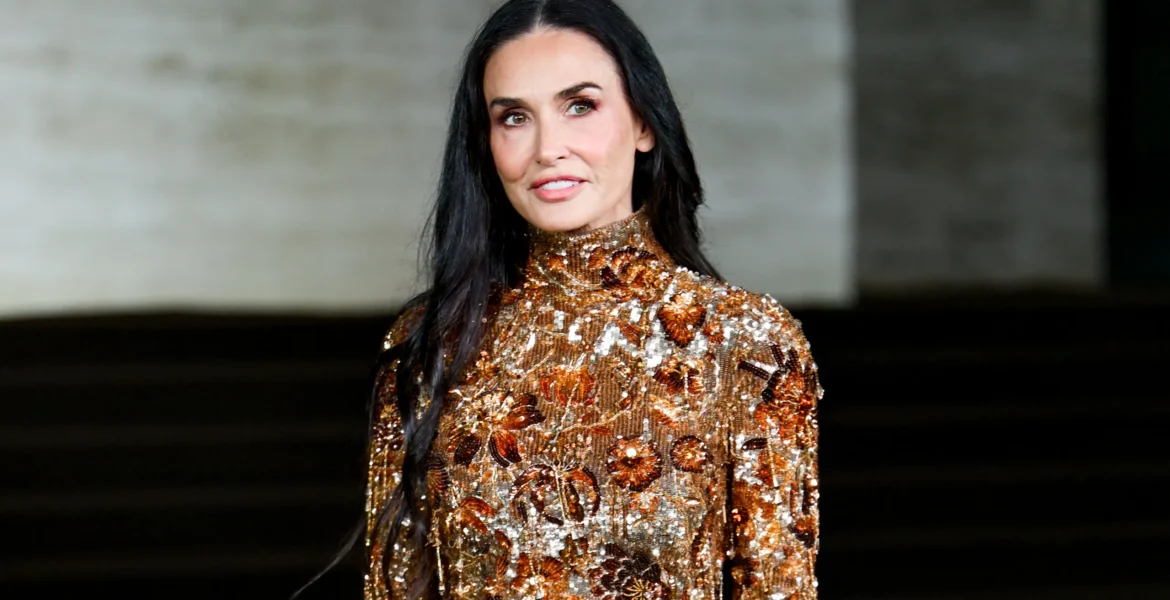
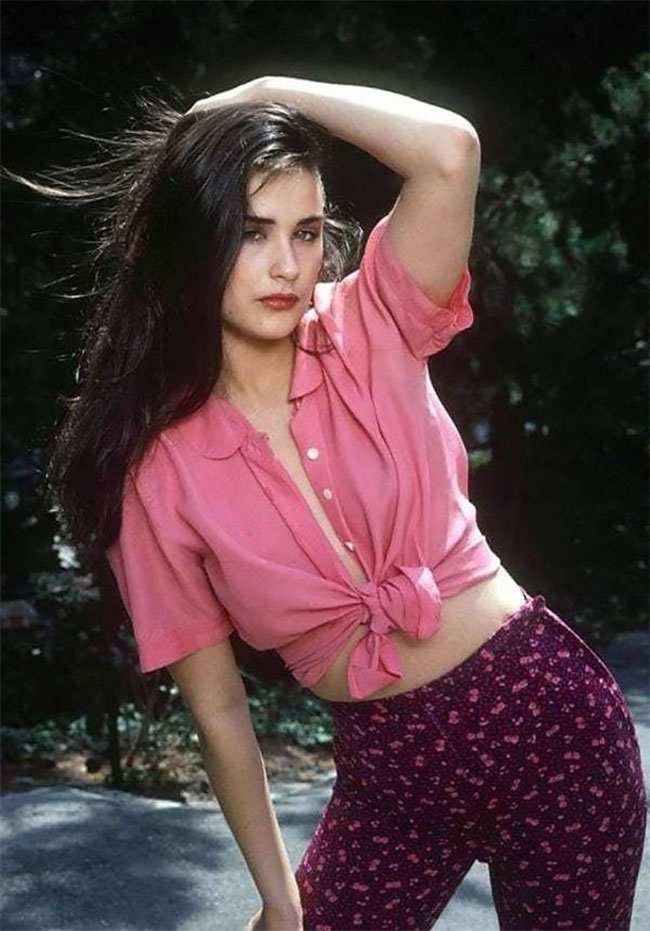
Demi Moore’s early years in Hollywood were anything but ordinary. Long before she became an established A-list actress, young Demi Moore was already attracting attention with her distinctive beauty, bold fashion choices, and fearless screen presence. From her breakthrough on General Hospital to her rise through St. Elmo’s Fire, Ghost, and other major films, Moore built a career that changed how Hollywood viewed young female stars. Her transformation was not simply about hairstyles or red-carpet dresses. It reflected a performer becoming more confident, ambitious, and willing to take risks. Looking back at her early career reveals why her 1980s and 1990s looks remain influential and why her journey continues to fascinate fans today.
Who Was Demi Moore Young?
Demi Moore young entered Hollywood during a period when a new generation of actors was reshaping American cinema. Born Demetria Gene Guynes on November 11, 1962, in Roswell, New Mexico, she experienced a highly unsettled childhood and moved frequently before eventually settling in Los Angeles. Those early experiences helped her become adaptable and comfortable around different people.
By her late teens, Moore had already started pursuing entertainment opportunities. She left high school at 16 and explored modeling before turning seriously toward acting. At only 19, she landed the role of Jackie Templeton on General Hospital, giving her an important early platform and introducing audiences to the young actress who would soon become a major Hollywood name.
| Detail | Information |
|---|---|
| Full Name | Demi Gene Guynes |
| Known As | Demi Moore |
| Born | November 11, 1962 |
| Birthplace | Roswell, New Mexico, USA |
| Profession | Actress, producer, and author |
| Acting Debut | Choices (1981) |
| Early TV Role | Jackie Templeton in General Hospital |
| Breakthrough | St. Elmo’s Fire (1985) |
| Major Film Success | Ghost (1990) |
| Notable Films | A Few Good Men, Indecent Proposal, Disclosure, G.I. Jane |
| Spouse Most Associated With Early Career | Bruce Willis |
| Major 1990s Achievement | Became one of Hollywood’s highest-paid female stars |
| Known For | Acting, fashion influence, dramatic transformations, and long Hollywood career |
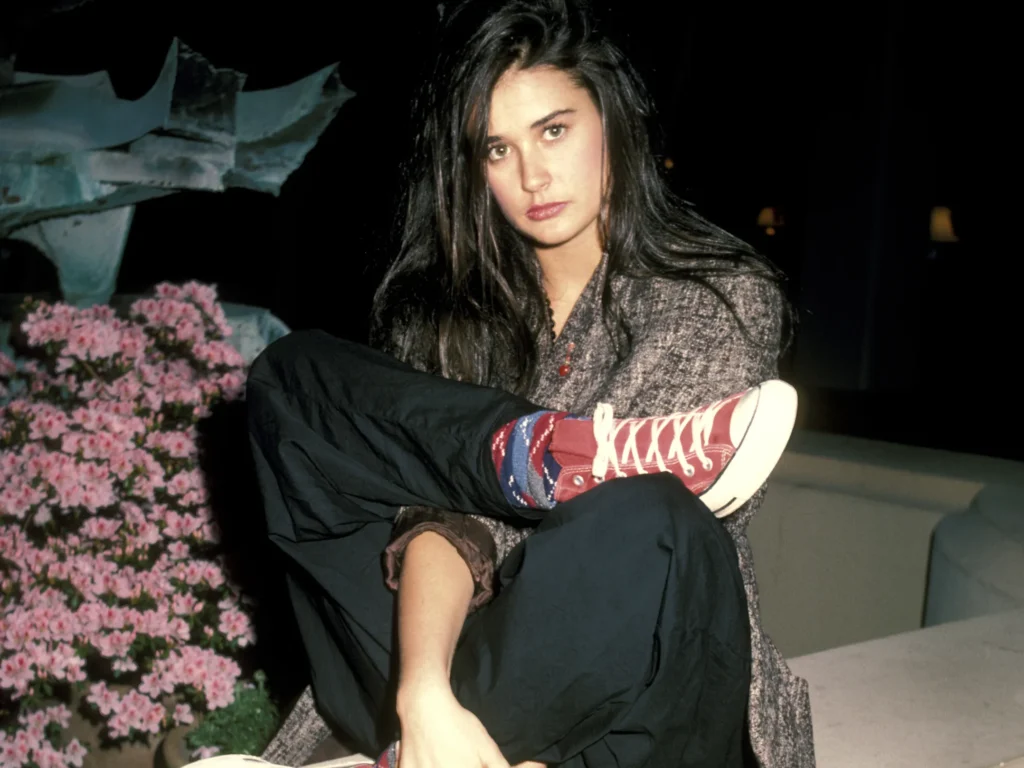
Demi Moore’s Early Life Before Fame
Moore’s childhood was complicated by frequent moves and instability at home. According to Biography.com, she had moved more than 30 times by age 14. Instead of preventing her from connecting with people, that experience helped her learn how to adjust quickly to new environments. It became an unexpected foundation for her acting career.
Her teenage years also demonstrated an early willingness to take control of her future. After leaving school, she worked as a debt collector and pursued modeling while developing an interest in acting. This unconventional route is important when looking at Demi Moore young because her rise was built through persistence rather than an effortless entrance into Hollywood.
Demi Moore Young on General Hospital
Moore’s first major television opportunity arrived in 1981 when she joined General Hospital. She played journalist Jackie Templeton for two years, gaining professional experience while becoming recognizable to daytime television viewers. Vogue highlights her 1981 promotional appearance as an early example of her distinctive look, complete with thick eyeliner and an ivory knit turtleneck.
Her General Hospital period also shows how different her image was before mainstream movie stardom. She had not yet developed the polished red-carpet identity associated with her later career. Instead, her early style reflected the fashion of the early 1980s while allowing her natural features and dark hair to remain central to her appearance.
Her First Movie Roles
While working in television, Moore also began appearing in films. Her movie debut came in the 1981 independent drama Choices, followed by appearances including Parasite and Young Doctors in Love. These early projects gave her valuable experience before she moved toward the roles that would make her a household name.
The importance of these early roles is easy to overlook because they came before her blockbuster period. Yet they helped Moore establish a professional foundation. She was learning how film sets operated, experimenting with different characters, and gradually moving beyond the limitations of being known primarily as a young television performer.
St. Elmo’s Fire Made Demi Moore young a Star
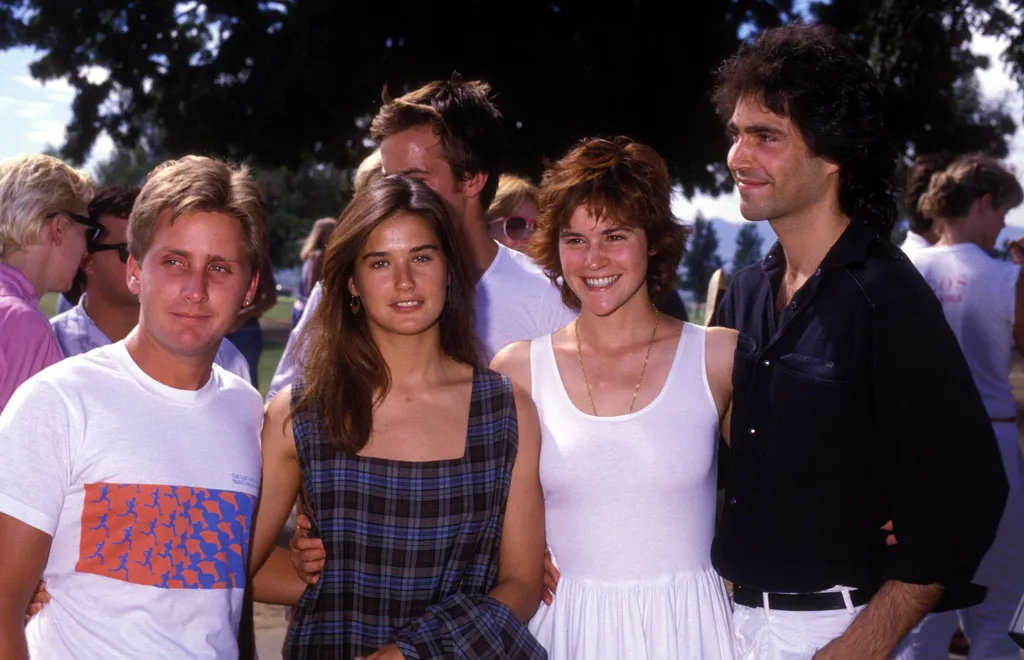
The major turning point came with St. Elmo’s Fire in 1985. Moore appeared alongside Emilio Estevez, Rob Lowe, Ally Sheedy, Andrew McCarthy, and Judd Nelson, becoming associated with the group of young performers later labeled the “Brat Pack.” The film helped move her from promising actress to recognizable Hollywood personality.
Although the movie received mixed critical reactions, its cultural impact was significant. Moore’s combination of confidence, rebellious energy, and screen presence made her particularly memorable. Vogue notes that her appearance in the film helped establish her as an “It girl,” while her style became increasingly influential away from the screen as well.
Why Her Brat Pack Era Still Matters
The Brat Pack label connected Moore with a generation of performers who dominated youth-oriented Hollywood during the 1980s. Her inclusion in that group helped define her public image, but she soon demonstrated that she could move beyond ensemble roles and build a career around major leading performances.
For fans searching for young Demi Moore photos, this period is particularly revealing because her appearance changed rapidly. Shorter hairstyles, tailored clothing, leather jackets, bold makeup, and increasingly sophisticated red-carpet looks showed an actress developing a recognizable personal style rather than simply following trends.
Demi Moore’s Iconic 1980s Style
Demi Moore young became known for experimenting with fashion rather than relying on one signature look. Vogue’s archive shows her wearing everything from oversized moto jackets and structured suits to cowboy boots, high-waisted trousers, knitwear, and elegant evening dresses. Her wardrobe often combined traditionally feminine pieces with tougher, more masculine details.
Her hairstyles were equally influential. Through the decade, Moore moved between longer hair, layered cuts, shorter styles, and eventually the blunt, cropped look that became closely associated with her late-1980s image. The evolution worked because her fashion choices changed with her growing confidence and increasingly prominent Hollywood status.
The 1989 Short Hair Transformation
One of Moore’s most recognizable late-1980s looks appeared around 1989, when she showcased a much shorter hairstyle. Vogue documents the look at the When Harry Met Sally premiere, where she appeared with Bruce Willis. The shorter cut became an important transition between her youthful 1980s image and the sophisticated style of the 1990s.
Her willingness to change her hair became a recurring part of her celebrity image. Rather than treating beauty as something fixed, Moore frequently used hairstyles and clothing to redefine herself. That willingness to evolve became one of the most memorable characteristics of her early public persona.
Demi Moore Young and Bruce Willis
Moore married actor Bruce Willis in 1987, during the period when both were becoming increasingly prominent in Hollywood. Their relationship attracted substantial public attention, and the couple frequently appeared together at premieres and major entertainment events. Vogue’s retrospective includes several photographs showing their coordinated public appearances during the late 1980s and early 1990s.
Their partnership also became part of Moore’s celebrity identity during her transition into major stardom. However, her professional achievements increasingly stood on their own. As the 1990s arrived, Moore moved from being recognized as a fashionable young actress to becoming one of Hollywood’s most commercially powerful leading women.
Ghost Was Demi Moore’s Major Breakthrough
Moore’s career reached another level with Ghost in 1990. She played Molly Jensen opposite Patrick Swayze, delivering a performance that demonstrated vulnerability and emotional depth. The movie became a huge commercial success, earning approximately $218 million worldwide and receiving five Academy Award nominations.
The importance of Ghost to Demi Moore young career cannot be overstated. It proved that she could carry a major romantic drama and connect with a broad international audience. Her image also changed around this period, moving toward a more glamorous and mature Hollywood aesthetic that would define much of the following decade.
The Famous Ghost-Era Look
Around the release of Ghost, Moore experimented with glamorous gowns and lighter hair, demonstrating how dramatically a celebrity image could change from one project to another. Vogue’s photographic retrospective captures this shift through her 1990 appearances, including an elegant beaded platinum gown at the Golden Globe Awards.
The change was more than cosmetic. Moore was now being photographed as a leading Hollywood star rather than simply a promising young actress. Her public appearances, movie roles, and fashion choices increasingly worked together, creating the powerful celebrity image that defined her early 1990s career.
Demi Moore’s Rise Through the 1990s
Following Ghost, Moore continued taking prominent roles. She appeared in A Few Good Men in 1992 with Tom Cruise and later starred in Indecent Proposal in 1993 with Woody Harrelson and Robert Redford. These projects strengthened her position as a commercially successful leading actress.
Her momentum continued with Disclosure in 1994, and by 1995 she had reached an extraordinary point in her career. Biography.com reports that she became the highest-paid female actor at the time, receiving $12.5 million for Striptease. Her financial success reflected how much her Hollywood influence had grown in little more than a decade.
From Ingenue to A-List Actress
The transformation from young actress to established star happened gradually rather than overnight. Early television work gave Moore experience, St. Elmo’s Fire gave her visibility, Ghost delivered mainstream breakthrough success, and the major films that followed established her as a leading Hollywood figure.
Her style followed the same trajectory. The playful and sometimes rebellious fashion of her early years gradually became more polished and sophisticated. Yet Moore never abandoned experimentation. That combination of glamour and risk-taking helped keep her appearance culturally relevant throughout the decade.
Demi Moore’s Most Memorable Young Looks
Vogue’s retrospective provides a useful timeline of Moore’s visual evolution. In 1981, she presented a youthful television-star image; by 1985, she had developed the confident presence associated with the Brat Pack. Her 1987 and 1988 appearances introduced stronger tailoring, statement jackets, elegant dresses, and increasingly recognizable celebrity styling.
The 1990s brought another transformation. Moore appeared in glamorous gowns, bold lipstick, tailored suits, pinstripe pieces, and sleek hairstyles. Her fashion became less about fitting into one era and more about projecting confidence. That is why photographs of Demi Moore young continue to attract attention decades later.
| Era | Memorable Look | Highlight |
|---|---|---|
| 1981 | Dark hair | Fresh, youthful style |
| 1985 | Layered brunette hair | St. Elmo’s Fire era |
| 1989 | Short dark hair | Sleek and sophisticated |
| 1990 | Glamorous style | Ghost breakthrough |
| 1997 | Shaved head | Bold G.I. Jane transformation |
The G.I. Jane Head-Shaving Moment
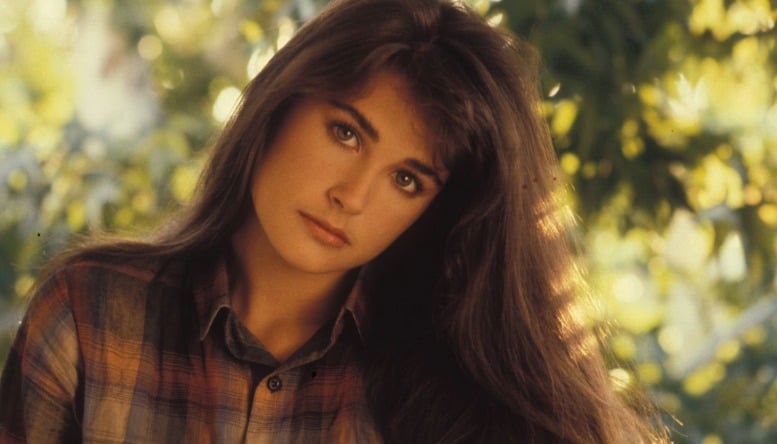
One of Moore’s most dramatic transformations came in 1997 when she shaved her head for G.I. Jane. The decision immediately became a major talking point because it challenged conventional Hollywood beauty standards. Moore later described the experience as liberating, explaining that she had not realized how much she hid behind her hair.
The moment became more than a movie publicity story. It demonstrated Moore’s willingness to alter her appearance substantially for a role and showed that her confidence was not dependent on maintaining one conventional beauty image. Few celebrity transformations of the period were as visually striking or culturally memorable.
Demi Moore Young vs. Demi Moore Today
Comparing Demi Moore Young with her later public image reveals a career built around reinvention. The actress who appeared on General Hospital in the early 1980s eventually became the star of major films, a fashion icon, and one of the most recognizable actresses of her generation.
Her later career has also challenged the idea that an actress’s most important period must happen early in life. Moore returned to major critical attention with The Substance, a 2024 film that earned her a Golden Globe for Best Performance by a Female Actor in a Motion Picture—Musical or Comedy in January 2025.
What Her Transformation Really Shows
Moore’s evolution is not simply a before-and-after story. Her early photographs show an actress experimenting with identity while learning how to navigate Hollywood. Her later work demonstrates that reinvention can continue long after the period when an actor is first labeled a rising star.
That makes her career particularly interesting for modern audiences. Her fashion choices, hairstyles, film roles, and public image changed repeatedly, but her willingness to take risks remained consistent. That quality connects the young actress of the 1980s with the accomplished performer audiences know today.
Demi Moore Young : Career Timeline
| Year | Career or Style Milestone |
|---|---|
| 1981 | Joined General Hospital as Jackie Templeton |
| 1981 | Made her film debut in Choices |
| 1982 | Appeared in Parasite |
| 1984 | Took roles in Blame It on Rio and No Small Affair |
| 1985 | Rose to wider attention through St. Elmo’s Fire |
| 1987 | Married Bruce Willis and continued building her Hollywood profile |
| 1988–1989 | Developed increasingly recognizable red-carpet and short-hair looks |
| 1990 | Achieved a major breakthrough with Ghost |
| 1992 | Starred in A Few Good Men |
| 1993 | Appeared in Indecent Proposal |
| 1994 | Starred in Disclosure |
| 1995 | Became the highest-paid female actor at the time |
| 1997 | Shaved her head for G.I. Jane |
The timeline shows how quickly Moore progressed from television newcomer to major movie star. Her early 20s were spent establishing herself, while her late 20s and early 30s brought some of her most influential roles and fashion moments.
Why Demi Moore Young Remains So Popular
Interest in Demi Moore Young continues because her photographs capture several important stages of Hollywood history. She moved from early-1980s television into the Brat Pack era, then into blockbuster cinema and high-profile fashion culture. Each period produced a noticeably different version of her public image.
There is also a broader lesson in her transformation. Moore did not build longevity by preserving exactly the same appearance or career formula. She repeatedly changed her hairstyle, wardrobe, roles, and public image. That ability to evolve helped turn an early Hollywood breakthrough into a decades-long career.
Frequently Asked Questions
How old was Demi Moore when she started acting?
Demi Moore was 19 when she joined General Hospital in 1981. She had already explored modeling and other work before beginning her professional acting career.
What was Demi Moore’s breakthrough movie?
St. Elmo’s Fire helped make Moore widely recognizable in 1985, while Ghost became her major mainstream breakthrough in 1990.
Was Demi Moore part of the Brat Pack?
Yes. Moore became associated with the Brat Pack after appearing in St. Elmo’s Fire alongside several young actors who became major stars of the 1980s.
Why did Demi Moore shave her head?
Moore shaved her head for her role in G.I. Jane in 1997. She later described the experience as liberating and said it changed how she thought about her hair and appearance.
What is Demi Moore best known for?
She is especially known for films including St. Elmo’s Fire, Ghost, A Few Good Men, Indecent Proposal, Disclosure, and The Substance.
Conclusion
Demi Moore Young represents one of the most fascinating transformations in modern Hollywood. From a teenage performer pursuing opportunities in Los Angeles to a television actress, Brat Pack star, blockbuster leading woman, and fashion icon, her rise happened through constant reinvention. Her memorable hairstyles, daring fashion choices, and major movie roles all became part of that journey.
What makes her early career especially compelling is that the transformation never stopped. The same actress who experimented with her image in the 1980s later embraced dramatically different looks and challenging roles. Her career proves that lasting celebrity appeal comes not only from appearance, but from confidence, adaptability, and the courage to keep evolving.
Also Read: Ivana Rodríguez
You may also like
Leave a Reply